
Why Your Water Heater Might Be Working Harder in Summer
Summer in Princeton, TX brings hot weather, longer days, and more activity around the house. Many homeowners assume their water heater takes a break during these months because nobody wants a steaming hot shower in July. The reality is different. Your water heater often works harder in summer due to increased household demand, sediment buildup, and rising groundwater temperatures that affect performance in unexpected ways. Hot weather also stresses the unit’s components, especially if the tank sits in a garage or attic where ambient temperatures climb past 100 degrees. Understanding why this happens helps you protect your investment, lower your utility bills, and avoid an inconvenient breakdown during the busiest time of year. BlackRock Plumbing Company sees a clear pattern of summer water heater issues across McKinney, Princeton, and surrounding communities every season.
How Summer Heat Affects Your Water Heater Performance
The Texas summer puts a heavy load on every appliance in your home, and your water heater sits near the top of that list. Outside temperatures regularly climb above 95 degrees, and the spaces where water heaters live often run even hotter. Garages, utility closets, and attics trap heat throughout the day, which forces your unit to operate in conditions it was not designed to handle comfortably. Household water use also shifts during summer, with more laundry, more dishes, more guests, and more outdoor rinsing. All of these factors push your water heater to run cycles it would normally skip during cooler months. Recognizing how summer heat changes water heater performance gives you the knowledge to keep the system efficient.
Summer Heat Increases Water Heater Workload in Hidden Ways
The first thing most homeowners miss is how ambient temperature affects a gas or electric water heater. When the surrounding air sits at 110 degrees in a closed garage, the unit has trouble venting properly and the burner or heating elements struggle to maintain efficient cycles. Gas water heaters depend on combustion air to operate cleanly, and hot stagnant air contains less oxygen than cool air. This forces incomplete combustion, which wastes fuel and creates soot inside the burner chamber. Electric units do not face the same combustion issue, but the heat still degrades the wiring, thermostat, and upper element over time. The harder the unit works in a hot space, the faster the components wear out and the higher your gas or electric bill climbs.
The second factor is groundwater temperature, which most homeowners never consider. During winter, the water entering your home from the municipal supply can be as cold as 50 degrees, so your water heater needs to raise it dramatically to reach the setpoint. In summer, that incoming water temperature climbs into the 70s or even low 80s in North Texas, which should mean less work for the heater. The problem is that summer demand often doubles, with kids home from school, guests visiting, and more frequent laundry loads from pool towels and sports gear. The unit cycles on far more often, even though each cycle requires less heating, and that constant cycling wears out the gas valve, thermocouple, or heating elements. More cycles mean more strain on every moving part inside the tank.
The third hidden factor is expansion. Water expands as it heats, and your plumbing system needs an expansion tank or thermal expansion valve to handle that pressure safely. When ambient temperatures rise, the cold water entering your tank is already warmer than usual, which means the expansion inside the tank is more aggressive than during winter months. If your expansion tank is old, waterlogged, or missing entirely, the extra pressure stresses the tank walls, the temperature and pressure relief valve, and every fitting downstream. You may notice the T and P valve dripping during summer afternoons, which is a warning sign of pressure problems. Need a water heater inspection? Click here for our water heater inspection service.
Summer Heat Causes Water Heater Sediment Problems to Worsen
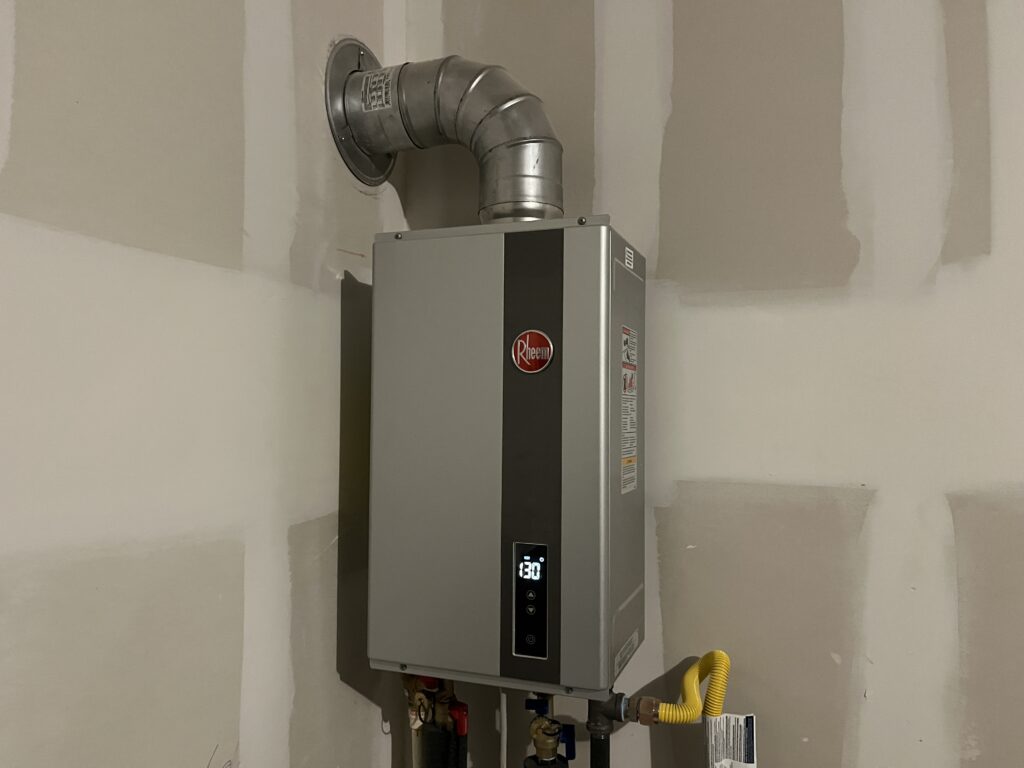
Sediment buildup is the single biggest enemy of a tank-style water heater, and summer makes the problem worse for several reasons. North Texas has notoriously hard water, with high levels of calcium and magnesium that settle to the bottom of the tank over time. When the burner fires up, that sediment layer acts like an insulating blanket between the flame and the water above it. The burner has to run longer and hotter to push heat through the sediment, which wastes energy and stresses the tank’s steel bottom. The hotter the burner runs, the faster the glass lining inside the tank degrades and exposes the metal to corrosion. Summer’s higher cycling frequency accelerates every part of this process.
You can usually hear sediment problems before you see them on your utility bill. A rumbling, popping, or crackling sound from the tank means water is trying to escape through the sediment layer as it heats up. The trapped steam pockets pop and create that distinctive noise, and the longer you ignore it, the worse the buildup gets. Summer is when most homeowners first notice these sounds because the unit cycles so much more frequently than in winter. By August, a tank that started the season with a mild sediment layer can have inches of mineral buildup on the bottom. That buildup also reduces your usable hot water capacity, so a 50 gallon tank might only deliver 35 gallons of usable hot water by the end of summer.
Flushing the tank annually solves most sediment issues, and summer is actually a great time to schedule the service. The water entering the home is warm enough that a partial flush will not shock the system, and you will not lose any meaningful comfort during the brief downtime. A professional flush removes the loose sediment, inspects the anode rod for corrosion, and checks the temperature and pressure relief valve for proper function. Skipping this maintenance during a hot Texas summer is one of the fastest ways to shorten the life of your unit. Most tank water heaters should last 8 to 12 years, but neglected units in hot environments often fail at 6 or 7. Want professional water heater service? Click here for our water heater repair service.
Summer Heat Pushes Water Heater Demand to Yearly Highs
Household water use peaks in summer for reasons that go beyond what most people realize. Pool fills and refills pull thousands of gallons through the main, which lowers pressure briefly and can stir up sediment in your tank when flow resumes. Outdoor showers, garden hose use, and frequent vehicle washing add to the total daily draw on the system. Kids and teens shower more often during summer break, sometimes multiple times per day after pool sessions, sports practices, or yard work. Guests staying over for vacation visits add another layer of demand that the water heater was not sized to handle indefinitely. All of this combines to keep the unit running far more cycles per day than it would in February.
Laundry habits also change dramatically in summer, even if homeowners do not consciously notice it. Pool towels, beach towels, athletic uniforms, and sweat-soaked work clothes all pile up faster than they do in winter. Many families run two or three loads per day during peak summer weeks, and each warm or hot wash cycle pulls heated water from the tank. The dishwasher also runs more often when families host barbecues, pool parties, or holiday gatherings throughout the season. Every appliance that uses hot water competes for the same finite tank capacity, and the recovery time between cycles shrinks. A water heater that easily kept up in winter can suddenly feel inadequate by July.
The combined effect of all this extra demand is that your water heater may run nearly continuously during peak afternoon and evening hours. The burner or heating elements that would normally rest for hours between cycles barely get a chance to cool down. This constant operation accelerates wear on every internal component, from the gas valve and thermocouple to the dip tube and anode rod. Homeowners who notice their hot water running out faster than usual during summer are seeing the early signs of an overworked unit. Scheduling an inspection before the heaviest demand weeks is the smartest move you can make. A trained plumber can spot issues before they turn into a cold shower emergency.
What You Can Do to Reduce Water Heater Strain in Summer
The good news is that summer water heater problems are largely preventable with a few simple habits and timely maintenance. Your unit does not have to suffer through three months of overwork, and your utility bills do not have to spike every June. A combination of temperature adjustments, demand management, and professional maintenance can extend the life of your water heater significantly. Most of these steps cost little or nothing, and the savings show up on the next gas or electric bill. Homeowners in Princeton, McKinney, Allen, and Wylie all face the same Texas summer pressures, so these tips apply across the entire BlackRock service area. Taking action early in the season pays off far more than waiting for a breakdown.
Reduce Water Heater Strain in Summer With Smart Temperature Settings
The first and easiest adjustment is your thermostat setting on the water heater itself. Many units come from the factory set at 140 degrees, which is hotter than most households actually need and creates a scalding risk for children and seniors. Lowering the setpoint to 120 degrees is the sweet spot recommended by the Department of Energy for safety, comfort, and efficiency. Every 10 degree reduction in setpoint can save between 3 and 5 percent on your water heating costs over the course of a month. During summer, when incoming groundwater is already warmer, you can often go to 115 or 120 without noticing any difference in shower comfort. The unit will cycle less frequently, run shorter cycles, and put far less stress on every internal component.
Insulation is another low cost adjustment that pays back quickly during hot months. An older water heater without an insulation blanket loses heat constantly into the surrounding air, which means it has to reheat the same water multiple times per day even if nobody is using it. A simple fiberglass blanket costs around 30 dollars and can reduce standby heat loss by 25 to 40 percent on older units. Newer units often have factory insulation that makes blankets unnecessary, so check your owner’s manual before adding one. Also insulate the first six feet of hot water pipe leaving the tank, since that heated pipe radiates energy into the room every time the burner fires. Pipe insulation sleeves cost a few dollars per length and install in minutes with no tools.
Timer controls and smart thermostats represent the next level of summer water heater management. If your household has predictable usage patterns, such as morning showers and evening dishes, a timer can shut the heater off during the long midday hours when nobody is home. Smart water heater controllers learn your patterns and adjust automatically, sometimes saving 10 to 15 percent on annual heating costs. Vacation mode is another underused feature that drops the setpoint significantly when you travel for summer trips. Even a long weekend away can save several dollars if you remember to engage vacation mode before leaving. These small habits add up across an entire summer and reduce the wear on your unit considerably.
Reduce Water Heater Strain in Summer With Smart Household Habits
Spreading out your hot water use through the day is one of the most effective ways to reduce summer strain on the unit. Running the dishwasher, washing machine, and shower all within the same 30 minute window forces the heater to recover at maximum capacity. Spacing those activities a few hours apart lets the burner or elements cycle normally and prevents the dreaded cold shower at the end of the line. Encourage family members to coordinate shower times, especially on busy mornings when everyone is heading out at once. Even a 15 minute gap between showers gives the tank time to recover meaningful capacity. This single habit can eliminate most “ran out of hot water” complaints during peak summer weeks.
Shorter showers also make a measurable difference during summer demand peaks. A standard showerhead delivers 2.5 gallons per minute, so a 10 minute shower pulls 25 gallons of mixed hot and cold water from the system. Cutting that to 6 or 7 minutes saves enough hot water to handle one extra family member’s shower without strain. Low flow showerheads reduce the draw further, often to 1.5 or 1.8 gallons per minute, with no noticeable change in shower quality. Modern low flow models use air injection and pressure compensation to feel just as strong as older models. The savings in water and water heating energy add up to hundreds of dollars over the course of a summer in a busy household.
Cold water washing for laundry is another summer habit worth adopting permanently. Modern detergents are formulated to work well in cold water, and most loads come out just as clean as they would on warm or hot settings. Pool towels, athletic clothes, and everyday wear all do fine in cold cycles, and you save the hot water for sheets, undergarments, and heavily soiled items. The dishwasher uses much less hot water than people assume, since most models heat the water internally to the required temperature. Skipping the heated dry cycle saves additional electricity without affecting cleaning performance. These small habits combine to take pressure off the water heater during the months when it needs the most help.
Reduce Water Heater Strain in Summer With Professional Maintenance
Annual maintenance is the single most important thing you can do to protect a tank water heater from premature failure. A professional flush removes accumulated sediment, restores efficiency, and gives the plumber a chance to inspect the anode rod, T and P valve, and gas controls or electric elements. The anode rod is a sacrificial metal rod inside the tank that corrodes in place of the steel tank walls, and it should be inspected every two to three years. A depleted anode rod means the tank itself is starting to corrode, which leads to leaks and total failure within a year or two. Replacing the rod proactively can add five or more years to the life of an otherwise healthy tank. This is one of the highest return repairs in all of home plumbing.
Pressure testing is another part of professional maintenance that homeowners cannot easily do themselves. Excessive household water pressure shortens the life of every fixture, valve, and appliance in the home, including the water heater. North Texas municipal pressure often runs at 70 to 90 psi, and anything above 80 psi requires a pressure reducing valve to protect the system. The T and P relief valve on the water heater should be tested annually to make sure it opens at the rated pressure and reseals properly. A stuck or corroded relief valve is a serious safety hazard that can lead to tank rupture in extreme cases. Professional plumbers test these valves as a standard part of any water heater service call.
Tankless water heater owners need their own version of summer maintenance, which centers on descaling the heat exchanger. Hard water minerals build up inside the narrow heat exchanger passages of a tankless unit and reduce flow over time. A vinegar or commercial descaler flush every 12 to 18 months keeps the exchanger clean and maintains the manufacturer’s rated efficiency. Skipping this maintenance voids most tankless warranties and can lead to a 1,500 dollar repair on a unit that should last 20 years. Looking into a tankless upgrade? Click here for our tankless water heater service. Professional service is the difference between a unit that lasts a decade and one that lasts two.
Why You Need BlackRock Plumbing for Summer Water Heater Service
Summer is the worst time to discover your water heater has failed, and it is also the busiest season for plumbing companies across North Texas. Waiting until the tank leaks or the burner quits means joining a queue of other homeowners in the same situation, which can mean days without hot water. BlackRock Plumbing Company sees the same patterns every summer, with sediment failures peaking in July and August across Princeton, McKinney, and surrounding cities. Scheduling preventive service in late spring or early summer puts you ahead of the rush and protects you from the worst of the seasonal demand. Our team has the experience to spot small issues before they become big repairs.
BlackRock Plumbing Delivers Honest Summer Water Heater Service
Our company was built on the idea that honest plumbing solutions matter more than upselling and quick replacements. When we inspect a water heater, we tell you exactly what we find and what your real options are. Many units that other companies recommend replacing can be repaired with a new anode rod, a fresh thermocouple, or a simple flush. We will only recommend replacement when the tank itself is failing or when repair costs exceed the value of the remaining service life. This approach has earned us five-star reviews across Princeton, McKinney, and the surrounding 25 mile service radius. Honesty and integrity guide every estimate we provide.
Our technicians arrive on time, in uniform, and with the parts needed to handle most common water heater repairs in a single visit. We service every major brand of tank and tankless units, including gas, electric, and hybrid models. Our trucks carry common replacement parts so you are not waiting days for a thermocouple or T and P valve to arrive. Same-day service is available for most summer water heater emergencies across our service area. We respect your home with shoe covers, drop cloths, and careful workmanship that leaves the space cleaner than we found it.
Pricing is always provided up front before any work begins, with no hidden fees or surprise charges at the end of the job. We explain what the repair involves, what parts we are using, and what warranty coverage you receive on the work. Our written estimates give you the information you need to make a confident decision about your home. Financing options are available for larger repairs and full replacements when the budget is tight. We treat every customer the way we would want our own family to be treated when something goes wrong at home.
BlackRock Plumbing Brings Decade-Long Experience to Summer Water Heater Issues
Ten years of plumbing experience across North Texas has shown us every kind of water heater problem the region produces. Hard water, hot attics, and high summer demand create a unique set of challenges that out-of-state companies often misdiagnose. Our team understands how the local groundwater chemistry affects anode rod consumption and how summer attic temperatures stress gas valves and venting. This regional expertise translates into faster diagnostics, more accurate repair recommendations, and better long-term outcomes for your home. We have repaired and replaced units in homes across Princeton, Anna, Melissa, Prosper, and every community in between.
Licensed and insured operation gives you the legal and financial protection that fly-by-night operators cannot match. The state of Texas requires plumbers to be licensed for good reason, since improper gas connections and pressure work can create serious safety hazards. Our license number is posted on every truck and every invoice, and our insurance covers your property in the unlikely event something goes wrong during a service call. Permits are pulled when required, and all work meets or exceeds current plumbing code standards. This professionalism is the baseline you should expect from any plumber working in your home.
Continuing education keeps our team current on new water heater technologies, including heat pump units, smart controllers, and condensing tankless models. The industry has changed significantly over the past decade, and we have changed with it to deliver the best service possible. We can guide you through the energy efficiency rebates available from local utilities and the federal tax credits for qualifying installations. This knowledge often saves homeowners hundreds or thousands of dollars on upgrades they were going to make anyway. Smart guidance from an experienced plumber is one of the most valuable parts of a service call.
BlackRock Plumbing is the Right Choice for Summer Water Heater Service
Choosing the right plumbing company makes the difference between a stressful summer and a comfortable one. BlackRock Plumbing Company offers 24/7 emergency service across our entire 25 mile service area, so a midnight failure does not mean a sleepless night. Our phones are answered by real people, not automated systems that bounce you through menus while your tank leaks onto the garage floor. We respond quickly, diagnose accurately, and repair effectively the first time. Local ownership means we live in the same communities we serve and we stake our reputation on every job.
Five-star reviews from neighbors throughout Princeton, McKinney, Allen, Frisco, and the surrounding cities speak louder than any marketing claim we could make. Our customers tell their friends and family about us because we earned their trust through honest work and fair pricing. Word of mouth has built our business steadily over the past decade, and we work hard to protect that reputation on every service call. Repeat customers and referrals make up the largest part of our business, which is the truest measure of customer satisfaction. We would rather serve 100 happy customers than 1,000 unhappy ones.
Reaching us is simple, and getting a service call scheduled takes only a few minutes. Call (469) 877-7798 to speak with our team about summer water heater service, repairs, or replacement options. Email john.w@blackrockplumbingco.com for non-urgent questions, estimate requests, or scheduling preferences. Our office at 3016 Winding Meadow Trail in Princeton is the home base for service across all of our covered communities. Summer is a hard season on water heaters, and we are here to make sure yours makes it through without trouble.