
How to Spot a Hidden Slab Leak Before It Damages Your Foundation
A hidden slab leak is one of the sneakiest plumbing problems a homeowner in North Texas can face. It happens when a water supply line buried beneath or inside your concrete foundation springs a leak that you cannot see from the surface. Because the pipe sits under several inches of slab, the water has nowhere obvious to go, so it quietly soaks into the soil and concrete for weeks or even months. The expansive clay soils common across Princeton, McKinney, and the surrounding communities make this problem worse, since shifting ground puts constant stress on the pipes below your home. Many people only notice something is wrong once the damage has already spread to their flooring, walls, or foundation. The good news is that a slab leak almost always sends out early warning signals if you know what to look for. Catching those clues early can save you thousands of dollars in foundation repair and water damage cleanup. This guide walks you through the signs, the detection methods, and the reasons fast action protects your largest investment.
Warning Signs of a Hidden Slab Leak in Your Home
Spotting a hidden slab leak starts with paying close attention to the small changes most homeowners brush aside. A leak under your foundation rarely announces itself with a dramatic flood; instead, it shows up as a string of subtle clues that build over time. Your water bill might creep up for no clear reason, or you might hear a faint hiss of water when every faucet in the house is off. Some homeowners feel a warm patch on the floor, while others notice a musty smell or a crack forming along a wall. Each of these symptoms points toward water escaping somewhere it should not be. Recognizing the warning signs of a hidden slab leak early gives you the chance to act before the foundation suffers. The sections below break down the most reliable indicators you can check on your own.
Rising Water Bills as a Warning Sign of a Hidden Slab Leak
One of the clearest warning signs of a hidden slab leak is a water bill that climbs without any change in your household habits. A pressurized supply line under the slab can lose hundreds of gallons every single day, and that lost water still registers on your meter even though you never used it. If your usage jumps twenty or thirty percent in a month while your routine stays exactly the same, the leak is a strong suspect. Compare your current bill to the same month from the previous year, since seasonal watering and summer habits can throw off a simple month to month look. Many families dismiss a higher bill as a rate increase or a busy month with visiting guests. That delay gives the leak more time to weaken the soil beneath your home. A steady, unexplained rise is your meter quietly telling you that water is going somewhere it should not.
You can confirm the suspicion with a simple meter test that any homeowner can perform in a few minutes. Turn off every faucet, appliance, and ice maker, then go outside and read the numbers on your water meter. Wait one to two hours without using any water at all, then read the meter a second time. A meter that has moved while everything inside the house stayed off means water is escaping somewhere in the system, and a slab line is a leading cause. Some modern meters have a small triangular or dial shaped leak indicator that spins when water flows, which makes the test even easier to read. If that indicator keeps moving, you have a live leak that needs professional attention. This test does not tell you the exact location, but it confirms that you are not imagining the problem.
A slow slab leak can hide inside a normal looking bill for a surprisingly long time, which is why tracking your usage matters so much. Set a habit of glancing at your monthly statement and noting the gallons used rather than just the dollar amount. Most North Texas utility providers post your usage history online, so you can spot a trend across several months at a glance. When you see a gradual upward climb that does not match your life, treat it as a serious clue rather than a billing quirk. Catching the pattern early means the difference between a small spot repair and a major foundation project. Pairing this habit with the other signs in this guide builds a clear picture of what is happening under your floor. The sooner you connect the dots, the less the leak can cost you.

Warm Floor Spots That Signal a Hidden Slab Leak
A warm spot on your floor is a telling sign of a hidden slab leak, and it usually points to a break in the hot water line. Hot water lines run through the slab right alongside the cold lines, and they tend to leak more often because heat speeds up corrosion and expansion inside the pipe. When hot water escapes under the concrete, it heats the slab from below and creates a patch that feels noticeably warmer than the surrounding floor. You might first notice it walking barefoot across a tile or laminate floor, where one area feels strangely toasty in a room that should be uniform. Pets often gravitate to these warm spots, so a dog or cat suddenly favoring one section of bare floor can be an accidental tip. The warmth comes from a real source of energy loss, since your water heater keeps working to replace the hot water draining into the ground. That constant demand is another reason a hot side slab leak drives up both your water and your energy costs.
Tracking down a warm spot takes a little patience, but it helps you describe the problem clearly to a plumber. Walk the bare floors of your home slowly during the cooler part of the day, when the contrast between a leak and the normal slab is easiest to feel. Pay special attention to hallways, the area near the water heater, and rooms where supply lines are most likely to run. A warm zone that stays warm even after you have not used hot water for hours is a red flag, since a normal floor would cool down. Carpet and thick rugs can mask the warmth, so check the harder surfaces first and note any spot that feels off. Write down where the warm areas sit relative to walls and fixtures so the location data is ready when help arrives. These notes can shorten the time a technician spends locating the leak.
It is important not to confuse a hot water slab leak with other sources of floor warmth before jumping to conclusions. Sun exposure through a window, a nearby heat vent, or a radiant heating system can all create warm areas that have nothing to do with plumbing. The difference is consistency, since a leak driven warm spot stays warm at odd hours and does not follow the sun or your thermostat. If the warmth lines up with the path of your hot water lines and shows up alongside a higher bill, the case for a slab leak grows much stronger. A licensed plumber can confirm the source quickly with the right equipment instead of guesswork. Trying to break into the slab yourself to investigate is risky and can cause far more damage than the leak itself. Leave the confirmation to a professional who can pinpoint the exact spot without tearing up your home.
Sounds and Smells That Reveal a Hidden Slab Leak
Your ears can reveal a hidden slab leak long before any water appears, since pressurized water escaping a pipe makes a distinct sound. Stand in a quiet room with every fixture turned off and listen for a faint hiss, a soft rushing noise, or the sound of running water with no clear source. This sound often comes through the floor or low along the walls, and it grows easier to hear at night when the house is calm. Some homeowners describe it as a constant whisper that they only notice once they stop and pay attention. Place your ear near the floor in different rooms to find where the noise is loudest. The sound itself is the water forcing its way through a crack or pinhole in the buried line. When you hear water moving while nothing is in use, treat it as one of the strongest slab leak clues you can find.
Smell offers another layer of evidence that a slab leak is at work under your home. Water trapped beneath the foundation has no way to dry out, so it breeds mold and mildew in the soil and the porous concrete. Over time that moisture creates a musty, earthy odor that drifts up through small gaps and settles into carpet, baseboards, and the lower part of your walls. If a room smells damp no matter how often you clean it, hidden moisture is a likely culprit. The odor tends to be strongest near the leak, which can help narrow down the search area. Mold spores thriving on this trapped water can also affect indoor air quality, which makes the problem a health concern and not just a plumbing one. A persistent musty smell paired with other warning signs deserves a prompt professional inspection.
Visual changes often follow the sounds and smells once a slab leak has been active for a while. You might spot dampness wicking up through flooring, tile that lifts or pops loose, or carpet that stays damp in one stubborn area. Cracks can appear in walls, ceilings, or the floor as the saturated soil swells and the foundation begins to shift. Baseboards may warp, paint can bubble, and door frames sometimes fall out of square as the slab moves. These structural clues mean the leak has likely been running for some time and is already affecting the home. When you notice them, the situation has moved past simple monitoring and into urgent repair territory. Acting quickly at this stage limits how far the damage can spread before a plumber stops the source.
How Professionals Detect a Hidden Slab Leak Under Your Foundation
Once you suspect a problem, trained plumbers use specialized tools to confirm and locate a hidden slab leak without tearing up your whole floor. Modern detection is precise, and a skilled technician can often pinpoint a leak within a small area before any concrete is touched. This accuracy matters because every unnecessary hole in your slab adds cost and disruption to the repair. The process usually combines listening equipment, pressure testing, and isolation of the hot and cold lines to narrow down the exact spot. Guessing at a slab leak almost always leads to wasted effort and extra damage, so professional detection pays for itself. The methods below show how the experts find a leak that stays completely out of sight. Each technique builds on the others to deliver a confident location before repairs begin.
Electronic Leak Detection for a Hidden Slab Leak
Electronic leak detection is the backbone of finding a hidden slab leak quickly and accurately. Technicians use sensitive acoustic listening devices that amplify the sound of water escaping a pressurized pipe deep within the concrete. These tools can pick up the faint hiss or rumble of a leak that the human ear could never catch through several inches of slab. By moving the sensor across the floor and comparing the volume at each point, a plumber can zero in on the loudest spot, which marks the leak. This approach is noninvasive, since it reads sound through the surface rather than requiring any digging. The skill of the operator matters as much as the equipment, since interpreting the readings takes training and experience. Done right, electronic detection turns a guessing game into a precise search.
Infrared and thermal imaging adds another powerful layer to the detection process, especially for hot water leaks. A thermal camera reads the temperature across your floor and displays warm zones that the naked eye would miss. Because a hot water slab leak heats the surrounding concrete, it shows up as a bright patch on the camera screen that traces the path of the escaping water. This technology lets a technician confirm a warm spot you may have felt with your bare feet and see exactly how far the heated area extends. For cold water leaks, the camera can sometimes pick up the cooler, saturated zone instead. Pairing thermal imaging with acoustic listening gives the plumber two independent readings that confirm each other. That overlap dramatically improves the odds of finding the leak on the first attempt.
If you need professional leak detection, click here for our leak detection service and let our team locate the problem without guesswork. Our technicians arrive with the listening gear and thermal tools needed to trace a slab leak to a tight location. We take the time to map the supply lines and check every clue before recommending any repair. This careful approach protects your floor from unnecessary holes and keeps the project as small as possible. A precise diagnosis up front means a faster, cleaner fix and a lower final bill. We would rather spend extra minutes finding the exact spot than break through concrete in the wrong place. That commitment to accuracy is the heart of honest slab leak detection.
Pressure Testing to Confirm a Hidden Slab Leak
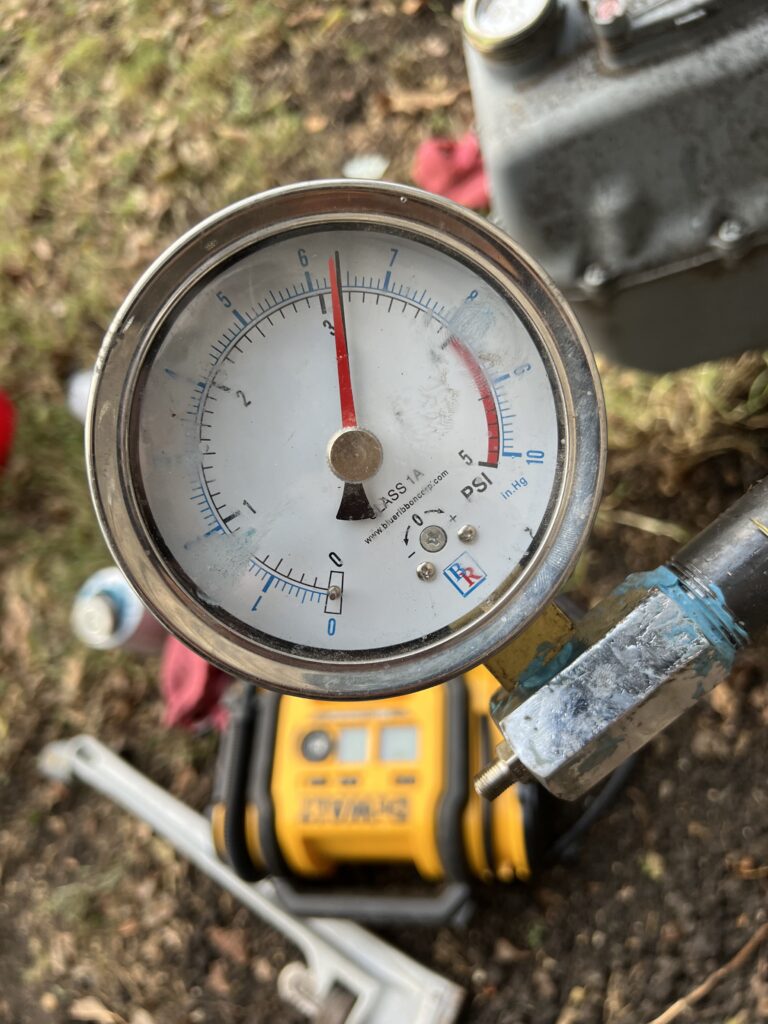
Pressure testing is a proven way to confirm a hidden slab leak and tell the supply lines apart from other plumbing. A technician isolates the water system, charges it to a known pressure, and then watches a gauge to see if the pressure holds steady. A line that loses pressure while everything is sealed off has a leak somewhere along its run, and a slab line is a frequent cause. By shutting valves in stages, the plumber can narrow the problem to a single section of pipe and rule out drains or fixtures. This test gives clear, measurable proof rather than relying on symptoms alone. It also helps separate a true slab leak from a leak in an exposed wall or under a sink. The numbers on the gauge remove much of the doubt before any repair begins.
Isolating the hot and cold lines is a key step that pressure testing makes possible. Plumbers can pressurize one side at a time to learn if the leak sits on the hot water line or the cold water line. Because hot lines corrode and fail more often, confirming the side guides the search and shortens the time spent locating the break. The test can also reveal the severity of the leak, since a fast pressure drop suggests a larger break than a slow decline. This information shapes the repair plan and helps the homeowner understand the scope of the work. Knowing the affected side before opening the slab prevents the costly mistake of digging in the wrong area. Each piece of data trims risk out of the project.
Pressure testing works hand in hand with the listening and imaging tools rather than replacing them. The gauge confirms that a leak exists and which line is failing, while the acoustic and thermal gear pinpoint the precise location. A thorough plumber uses all of these methods together to build a complete picture before touching the concrete. This layered process is what separates a confident professional diagnosis from a hopeful guess. It protects your home from extra damage and protects your wallet from wasted repair attempts. For older homes with aging copper lines, this careful testing can also flag other weak spots worth watching. The result is a clear, evidence based plan that addresses the real problem.
Why You Should Fix a Hidden Slab Leak Right Away
A hidden slab leak is not a problem that improves with time, and waiting almost always makes the repair larger and more expensive. Every day the leak runs, it pushes more water into the soil under your foundation and feeds the cycle of swelling and shifting that cracks concrete. The cost of fixing the pipe is small compared to the cost of repairing a damaged foundation, ruined flooring, and mold remediation. Fast action keeps a manageable plumbing repair from turning into a major structural project. Below you will find the strongest reasons to call a professional as soon as you suspect a leak. Protecting your foundation and your budget starts with treating the warning signs seriously.
Protect Your Foundation by Repairing a Hidden Slab Leak Fast
Your foundation is the single most important structural element of your home, and a slab leak attacks it directly. Constant moisture under one part of the slab causes the expansive clay soil common in North Texas to swell, while drier areas stay put, and that uneven movement cracks the concrete. Over weeks and months, this can lead to sticking doors, cracked walls, and an uneven floor that signals serious foundation distress. Repairing the leak quickly stops the moisture source and lets the soil return to a more stable condition. The longer water keeps flowing, the deeper the damage reaches and the harder it becomes to reverse. Acting fast is the most reliable way to protect the part of your home that holds everything else up.
Water damage spreads far beyond the foundation when a slab leak goes unaddressed for too long. Saturated subflooring rots, hardwood warps, tile lifts, and carpet develops stubborn mold that no amount of cleaning can remove. The trapped moisture also creates an ideal environment for mildew that affects the air your family breathes. Each of these problems carries its own repair cost, and they add up quickly on top of the foundation work. A small pinhole leak in a buried copper line can quietly cause tens of thousands of dollars in cumulative damage. Stopping the leak early keeps the problem contained to the plumbing rather than letting it spread through the whole house.
Sometimes the smartest long term answer to a slab leak is rerouting or replacing the failing line rather than patching it. If you have aging copper pipes that keep developing leaks, a fresh run of pipe can solve the problem for good. Need a more permanent fix for repeated pipe failures? Click here for our repiping service to learn how a new water line can protect your home. Our team will explain the options clearly so you can choose the repair that fits your home and budget. We weigh the cost of a single spot repair against a reroute and give you an honest recommendation. That straightforward guidance helps you avoid paying for the same problem twice. A durable fix today saves you from another emergency tomorrow.

Save Money by Catching a Hidden Slab Leak Early
Catching a hidden slab leak early is one of the best money saving moves a homeowner can make. A leak found in its first weeks often needs only a small, targeted repair that costs a fraction of a full foundation fix. The same leak ignored for months can ruin flooring, crack the slab, and force expensive structural work. Every gallon lost also shows up on your water bill, so an early repair stops that steady financial drain. The math strongly favors quick action, since prevention is always cheaper than restoration. Treating the warning signs seriously turns a potential disaster into a routine service call.
Insurance is another reason early detection pays off, since many policies treat sudden damage differently from long neglected problems. A leak that has clearly been running for a long time can lead to denied claims, because insurers may view the resulting damage as preventable. Acting at the first sign shows that you addressed the issue responsibly and gives you a stronger position. Documenting the warning signs, your meter test, and the professional diagnosis builds a clear record of timely action. This paperwork can make a real difference when you file a claim for covered damage. A prompt response protects both your home and your eligibility for coverage.
Early repair also spares you the stress and disruption of a large scale emergency project. A small slab leak fix is a contained job, while a full foundation repair can mean moving furniture, lifting floors, and living through weeks of construction. Catching the problem early keeps your daily life mostly intact and your home in order. Sudden pipe failures can also escalate without warning, so monitoring matters. If a buried line bursts, click here for our burst pipe repair service for fast emergency help any hour of the day. Quick attention to a small leak keeps it from ever reaching that point.
Why Choose BlackRock Plumbing Company for Hidden Slab Leak Repair
BlackRock Plumbing Company brings ten years of hands on experience to every slab leak we diagnose and repair. We are licensed and insured, and we treat your home with the same care we would give our own. Our technicians use professional acoustic, thermal, and pressure testing tools to find the exact location of a leak before any concrete is touched. That precision keeps the repair small, the cost fair, and the disruption to your home as low as possible. We serve Princeton, McKinney, and the surrounding communities within a twenty five mile radius. When you call us, you get honest answers and a clear plan instead of pressure and guesswork.
Integrity sits at the core of how we run every job, which is something homeowners across North Texas have come to trust. We explain what we find in plain language, show you the evidence, and lay out your repair options without exaggeration. Our goal is the right fix for your situation, not the most expensive one we could sell. We back our work with reliable, five star service and a commitment to doing things the correct way the first time. Many of our customers come to us after a frustrating experience with a less careful company. We earn loyalty by being straight with people and standing behind every repair.
Slab leaks rarely wait for a convenient time, so we keep our twenty four seven emergency line open for the moments that cannot wait. A flooded floor at midnight or a warm spot that suddenly worsens deserves a fast, professional response. Our team arrives ready to find the leak, stop the water, and protect your foundation before the damage spreads. Suspect a hidden slab leak under your home? Call BlackRock Plumbing Company at (469) 877-7798 and let our experienced technicians take a look. We are proud to deliver dependable plumbing solutions with integrity to our neighbors throughout the area. Your home and your peace of mind are always our top priority.